




EN ISO 20471 explained – standard and protection classes
EN ISO 20471 describes requirements for high-visibility clothing. It defines the characteristics high-visibility garments must meet and how products are assigned to different protection classes.
This page explains the key principles of EN ISO 20471, protection classes 1 to 3 and the differences from other standards such as EN 17353 and the former EN 471.
What does EN ISO 20471 mean?

EN ISO 20471 is a standard for high-visibility clothing.
It defines requirements for:
- fluorescent background material
- retroreflective materials
- visible material areas
- arrangement of materials
- classification into protection classes
The aim of the standard is to make people more visible in higher-risk situations.
High-visibility clothing to EN ISO 20471 is used particularly in workplaces where people need to be easily detected.
Fluorescent and retroreflective material
High-visibility clothing to EN ISO 20471 combines different materials to improve visibility under different lighting conditions.
Fluorescent background material improves recognition particularly in daylight and poor visibility. Typical colours include fluorescent yellow and fluorescent orange.
Retroreflective material reflects incoming light back towards its source, supporting visibility in darkness or when light sources such as vehicle headlights are present.
In addition to the materials used, their minimum visible areas and arrangement on the garment are important for the relevant protection class.
EN ISO 20471 protection classes
EN ISO 20471 distinguishes three protection classes. They differ in their visibility requirements and associated level of protection.
The required class depends on the application, working environment and risk assessment.
EN ISO 20471 Class 1
Class 1 is the lowest of the three protection classes.
It is suitable for situations with lower visibility requirements where improved recognition of the wearer is still necessary.
Typical examples may include internal company premises or areas with a lower level of risk.
EN ISO 20471 Class 2
Class 2 has higher visibility requirements than Class 1.
Clothing in this class is often used in logistics, construction, industry or municipal operations.
The applicable requirements always depend on the specific workplace and risk assessment.
EN ISO 20471 Class 3
Class 3 is the highest EN ISO 20471 protection class.
It places the highest demands on visibility and is used where particularly good recognition is required, for example in road construction, railway environments or activities with high traffic exposure.
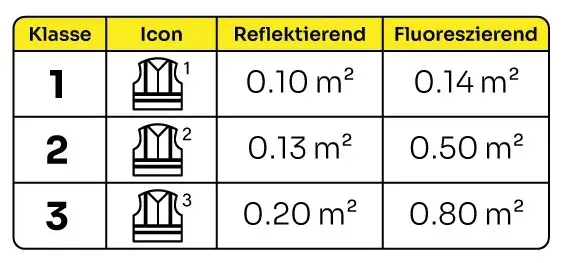
What minimum material areas apply under EN ISO 20471?
Classification into EN ISO 20471 protection classes is based in part on prescribed minimum areas of the materials used.
The following materials are considered in particular:
- fluorescent background material
- retroreflective material
The higher the protection class, the larger the required visible material areas.
|
Protection class |
Requirements |
|
Class 1 |
Basic visibility requirements |
|
Class 2 |
Higher requirements for visibility and material areas |
|
Class 3 |
Highest requirements for visibility and material areas |
Where is EN ISO 20471 high-visibility clothing used?

High-visibility clothing to EN ISO 20471 is used wherever people need to be particularly visible.
Typical applications include:
- construction companies
- road construction and maintenance
- logistics and transport
- industry and production
- municipal services
- waste management
- energy supply
- rail transport
- rescue services and other applications with increased visibility requirements
The appropriate high-visibility clothing and protection class always depend on the application, working environment and applicable requirements.
Which EN ISO 20471 protection class do I need?
The appropriate protection class depends on the application and the risks present.
Factors can include:
- working environment
- proximity to vehicles or machinery
- visibility conditions
- type of activity
- duration and nature of use
- company requirements
A general classification based only on individual factors such as speed or traffic volume is not sufficient.
Selection should always be based on the specific requirements and risk assessment.
EN ISO 20471 in Switzerland
EN ISO 20471 is also an important basis for high-visibility clothing in Switzerland.
It defines requirements for high-visibility clothing and helps companies select suitable garments for workplaces with increased visibility requirements.
Which clothing and protection class are suitable for a particular use depends on the work area, activity and applicable requirements.
Korntex offershigh-visibility vestsand high-visibility clothing that, depending on the model, is certified to EN ISO 20471.
What is the difference between EN ISO 20471 and EN 17353?
EN ISO 20471 and EN 17353 concern different applications and requirements for visible clothing.
EN ISO 20471 applies to high-visibility clothing and distinguishes protection classes 1, 2 and 3.
EN 17353 concerns enhanced-visibility clothing for medium-risk situations and uses its own classification.
Which standard is suitable depends on the intended application and visibility requirements.
Forchildren's safety vests and leisure products, EN 17353 may, for example, be relevant.
What is the difference between EN 471 and EN ISO 20471?
Older product information or documentation may still refer to EN 471.
EN ISO 20471 replaced the former EN 471 as the standard for high-visibility clothing.
Terms such as:
- EN 471 Class 2
- EN 471 high-visibility clothing
- high-visibility clothing to EN 20471
may therefore still appear in older documents or search queries.
For current products, always check the standard and protection class stated in the relevant product information.
High-visibility vests and clothing to EN ISO 20471
The standard and protection class met by a specific product are stated directly in its product information.
An overview of differenthigh-visibility vestsand high-visibility products in our category:
When selecting a garment, always check whether its certification and class are appropriate for the intended application.
Frequently asked questions about EN ISO 20471
What does EN ISO 20471 mean?
EN ISO 20471 sets requirements for high-visibility clothing and covers, among other things, materials, visible areas and protection classes.
Which protection classes does EN ISO 20471 have?
The standard distinguishes three protection classes: Class 1, Class 2 and Class 3. Class 3 has the highest visibility requirements.
What does EN ISO 20471 Class 3 mean?
Class 3 is the highest protection class and is used where particularly high visibility is required.
What high-visibility clothing is needed on construction sites?
The required class depends on the specific application and risk assessment. High-visibility vests and clothing to EN ISO 20471 are frequently used on construction sites.
What is the difference between EN ISO 20471 and EN 17353?
EN ISO 20471 concerns high-visibility clothing for professional applications. EN 17353 concerns enhanced-visibility clothing for other risk situations.
What does EN 471 Class 2 mean?
EN 471 Class 2 is an older designation from the former EN 471 standard. Current high-visibility clothing is classified according to EN ISO 20471.
Does EN ISO 20471 also apply in Switzerland?
Yes. EN ISO 20471 is also an important standard for high-visibility clothing in Switzerland. The class required depends on the application and applicable requirements.